top of page


Art by
Phoebe chui
About
Phoebe Chui
Phoebe Chui is a fine art practitioner from Malaysia whose work explores suspension, repetition, and disorientation through video, sound, projection, and installation. Her practice investigates the tension between order and chaos, centre and absence, and the unstable conditions of contemporary life.


Gallery
Our Signature Aesthetic

Endless Continuation
逝而不息
In " Endless Continuation " shows the duality of the thriving Tree of Life above and the withered Tree of Death below, connected by intertwined trunk.It represent how life emerges from death and death gives rise to new life, illustrating the unbroken cycle of existence.
Life and Death Are Not Opposites: The flourishing trunk of life and the decayed trunk of death are partners in the same eternal rhythm, not opposing forces.
My idea that life and death are deeply connected and continuous, reflecting the inevitable flow of existence.
It also reflect on the profound beauty and inevitability of the cycle that governs all life.
Life and Death Are Not Opposites: The flourishing trunk of life and the decayed trunk of death are partners in the same eternal rhythm, not opposing forces.
My idea that life and death are deeply connected and continuous, reflecting the inevitable flow of existence.
It also reflect on the profound beauty and inevitability of the cycle that governs all life.

Bereavement and Nurture
殇与哺
The mother lies quietly after the pain of childbirth, with her baby resting on her left side. Moths in the background symbolize her drained energy and the closeness of death. The baby represents hope but also reminds us of the pain and cost of giving life. The artwork highlights the harsh reality of childbirth as a painful sacrifice.

Whale fall
落鲸
In " Whale fall " shows a whale descending peacefully into the deep ocean at the end of its life.
The whale’s body nourishes marine life, symbolizing how death gives rise to new beginnings. The muted blues of the ocean and bursts of life around the whale represent the quiet yet profound balance of nature. This artwork highlights the whale’s gentle surrender as an act of giving, showing how every ending contributes to life’s continuation.
The whale’s body nourishes marine life, symbolizing how death gives rise to new beginnings. The muted blues of the ocean and bursts of life around the whale represent the quiet yet profound balance of nature. This artwork highlights the whale’s gentle surrender as an act of giving, showing how every ending contributes to life’s continuation.

Apocalypse
启示录
The painting shows a virus spreading destructively, symbolizing how life can cause suffering and death.
Twisted faces around the virus represent pain and despair caused by this uncontrollable force. This artwork highlights the paradox that life’s creation can also bring destruction.
It explores life’s darker, merciless side, where creation and destruction are intertwined.
Twisted faces around the virus represent pain and despair caused by this uncontrollable force. This artwork highlights the paradox that life’s creation can also bring destruction.
It explores life’s darker, merciless side, where creation and destruction are intertwined.

Entwined Symbiosis
共生之枷
In "Entwined Symbiosis" depicts the complex symbiotic relationship in love through the "couple tree" metaphor, showing the coexistence of dependence and competition.It symbolise eternal love in the public eye, they are actually in a cruel relationship, with the parasitic tree sucking nutrients from the host tree and the host tree working hard to survive.The intertwining of tree trunks and roots shows the tension in love. The parasitic tree grows vigorously, while the host tree looks tired due to loss of nutrients, symbolizing nourishment and consumption in love.
This painting links love to the cycle of life and death, showing that love is not just joy or sorrow, but the intertwining of creation, destruction, devotion and struggle, and also reflect on the idealization of love, revealing the complex, unexpressed reality of love—a perpetual dance of life and death, of opposing forces.
This painting links love to the cycle of life and death, showing that love is not just joy or sorrow, but the intertwining of creation, destruction, devotion and struggle, and also reflect on the idealization of love, revealing the complex, unexpressed reality of love—a perpetual dance of life and death, of opposing forces.

Hourglass
沙漏
我知道在我裡面,就是在我肉體之中,沒有良善,因為立志行善由得我,行出來卻由不得我。(罗马书7:18)
岁月的长河卷走了我最初的爱,留下了我,在冷冷的沙漏中,任凭时间将我的灵魂与肉体剥离。
似鱼一般,试图跳脱那孕育我生命的水,用自己的唾沫滋润着身体,似是活着,却已枯槁。
The long river of time has taken away my initial love, leaving me in the cold hourglass, letting time separate my soul from my body. Like a fish, I try to leap out of the water that nurtures my life, moistening my body with my own saliva, seeming alive, yet already withered.
岁月的长河卷走了我最初的爱,留下了我,在冷冷的沙漏中,任凭时间将我的灵魂与肉体剥离。
似鱼一般,试图跳脱那孕育我生命的水,用自己的唾沫滋润着身体,似是活着,却已枯槁。
The long river of time has taken away my initial love, leaving me in the cold hourglass, letting time separate my soul from my body. Like a fish, I try to leap out of the water that nurtures my life, moistening my body with my own saliva, seeming alive, yet already withered.

THE PRISON
因战争而失去自由的躯体,仿如没有灵魂的行尸走肉,或呐喊或沉默,显露了生命的苍白
The work depicts profound and emotionally charged themes, including incarceration, loss, and the personal and social impact of war. In the composition, an adult sits on the far right with his mouth open, symbolizing the loss of voice or authority. Next to them, a child sits on the wall, counting the days of his captivity, while another child at the far end of the cell stares in horror at the top of the spiral staircase, representing their fear of endless painful memories.
An inverted cityscape is depicted above the prison, foreshadowing the destruction of the prisoners’ homes, the fragmentation of their families, and the destruction of their country. A broken mirror lies at the adults‘ feet, reflecting their once peaceful and happy past, now shattered by the ravages of war.
The artwork provokes profound reflections on themes of incarceration, loss, and the impact of war on individuals and society. The works explore and reflect on human destiny and history through profound themes and emotional expressions.
The work depicts profound and emotionally charged themes, including incarceration, loss, and the personal and social impact of war. In the composition, an adult sits on the far right with his mouth open, symbolizing the loss of voice or authority. Next to them, a child sits on the wall, counting the days of his captivity, while another child at the far end of the cell stares in horror at the top of the spiral staircase, representing their fear of endless painful memories.
An inverted cityscape is depicted above the prison, foreshadowing the destruction of the prisoners’ homes, the fragmentation of their families, and the destruction of their country. A broken mirror lies at the adults‘ feet, reflecting their once peaceful and happy past, now shattered by the ravages of war.
The artwork provokes profound reflections on themes of incarceration, loss, and the impact of war on individuals and society. The works explore and reflect on human destiny and history through profound themes and emotional expressions.

The EYE
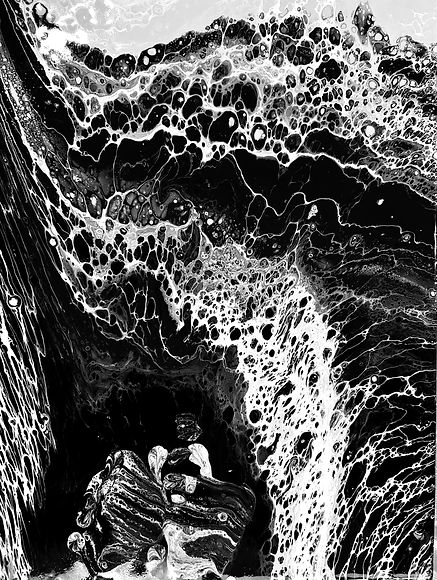
The spiritual eye can see through the surface of all things to their essence. It is not led by the mind, but rather stirred by something arising from the heart. It is subjective, a momentary stirring, a dialogue between the soul and all things.

Life and Death
nterwoven in life‘s tapestry, the melody of existence plays,
Boundaries seem boundless, eternity’s realm unfurls.
In the dance of cycles, births and deaths intertwine,
Flowers bloom and wither, as time‘s ripples gently unwind.
生死交织,生命旋律常奏,
边界无际,永恒之境蔓延。
循环之舞,生生死死,花开花落,
时光涟漪悠荡。
Boundaries seem boundless, eternity’s realm unfurls.
In the dance of cycles, births and deaths intertwine,
Flowers bloom and wither, as time‘s ripples gently unwind.
生死交织,生命旋律常奏,
边界无际,永恒之境蔓延。
循环之舞,生生死死,花开花落,
时光涟漪悠荡。


bottom of page